
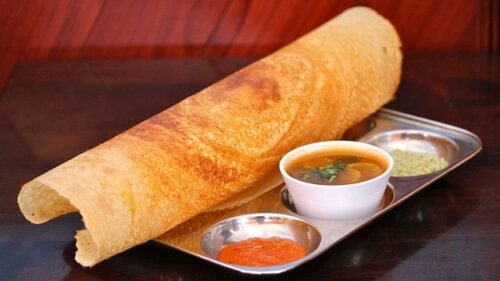
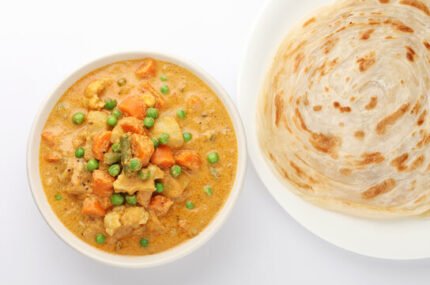
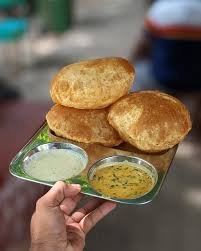
The Plain Dosa (or Sada Dosa) is the ultimate test of a South Indian cook. While it looks simple, the goal is a “paper-thin,” golden-brown disc that is shatteringly crisp on the outside and slightly spongy in the very center.
Since we’ve already explored the “loaded” versions like Onion Dosa and Masala Dosa, let’s master the art of the perfect, plain, restaurant-style pour.
🍳 The Art of the Plain Dosa
1. The Temperature Check
The most common mistake is a pan that is too hot or too cold.
-
The Test: Sprinkle a few drops of water on the tawa. They should sizzle and dance before evaporating.
-
The Reset: If the water evaporates instantly with a loud hiss, the pan is too hot. Wipe it with a damp cloth or a cut onion to cool it down before pouring.
2. The Pour & Spread
-
The Center: Pour a large ladle of batter right in the middle of the tawa.
-
The Spiral: Starting from the center, gently move the back of the ladle in a clockwise circular motion, spiraling outwards.
-
Light Touch: Don’t press down; let the weight of the ladle do the work to create a thin, even layer.
3. The Crisp (The Ghee Factor)
-
Oil/Ghee: Once the batter starts to look “dry” (about 30 seconds in), drizzle 1 tsp of Ghee or butter around the edges and a little in the center. Ghee gives that professional “Hotel Gold” color.
-
Wait for it: Do not try to flip it too early. A perfect Plain Dosa will start to lift its own edges off the pan when it’s ready.
-
The Fold: For a Plain Dosa, you don’t necessarily need to flip it if it’s thin enough. Just fold it into a triangle or a “Paper Roast” roll.




Reviews
There are no reviews yet.