
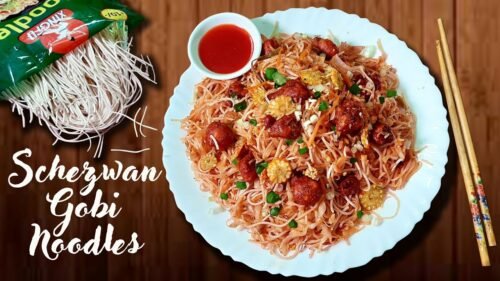
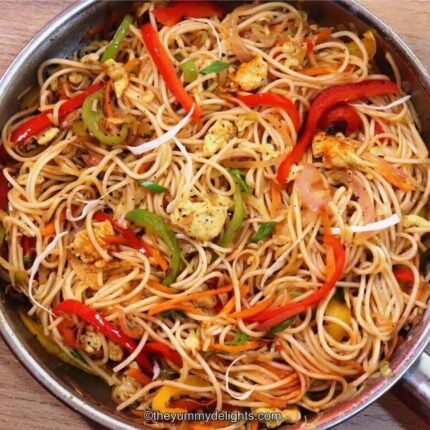
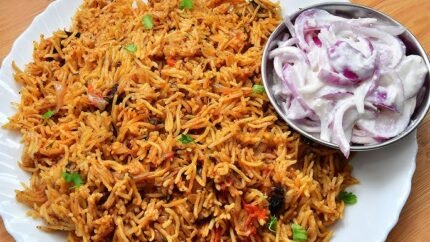
Ah, Gobi Noodles. It’s the ultimate “best of both worlds” dish—combining the crispy, saucy goodness of Gobi Manchurian with the comforting bulk of Hakka noodles. It’s essentially a party in a bowl.
If you’re looking to make this at home or just want to know what makes it tick, here is the breakdown of how to get that restaurant-style finish.
1. The Components
To get it right, you have to treat the cauliflower and the noodles as two separate stars before they merge.
-
The Gobi: The florets need to be battered (cornflour and maida/all-purpose flour) and deep-fried until they are “shatter-crisp.“
-
The Sauce: A mix of soy sauce, green chili sauce, and vinegar. High heat is non-negotiable here to get that wok hei (breath of the wok) smoky flavor.
-
The Aromatics: Plenty of finely chopped garlic, ginger, and spring onions.
2. Pro-Tips for the Best Texture
| Feature | The Secret |
| Crispy Gobi | Double-fry the cauliflower. Fry once at a lower temp to cook through, then again at high heat right before mixing to get it extra crunchy. |
| Non-Sticky Noodles | Rinse boiled noodles in cold water and toss them in a teaspoon of oil immediately to keep them separate. |
| The “Dry” vs. “Gravy” | For noodles, you want “Dry” Gobi Manchurian. If there’s too much sauce, your noodles will turn into a soggy mess. |


Reviews
There are no reviews yet.