
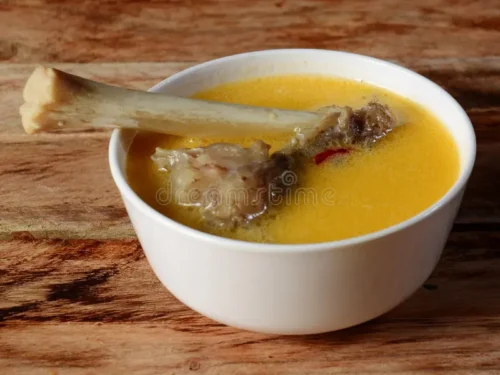

Now we’ve moved into the heavyweight category of comfort food. Mutton Paya Soup (Trotters Soup) is the ultimate restorative dish—it’s essentially the South Asian version of “liquid gold.“
If Gobi Noodles are the party and Kuska is the soul, Paya is the medicine. It’s slow-cooked for hours to extract every bit of gelatin and marrow from the lamb trotters, resulting in a sticky, rich, and deeply flavorful broth.
The Anatomy of a Perfect Paya
What makes a legendary Paya isn’t just the meat; it’s the texture of the soup.
-
The Gelatin: Because it’s made from the feet, the soup is naturally thick and “lip-smacking” (literally—your lips will stick together a bit). This is pure collagen, which is great for joint health and skin.
-
The Aromatics: A traditional Paya uses a “Potli” (a spice bag) or a fine grind of fennel seeds, black cardamom, cinnamon, and lots of black pepper to cut through the richness.
-
The Color: It ranges from a clear, light golden broth (found in Hyderabadi or Lucknowi styles) to a deep, spicy red (typical in Tamil Nadu or Military-style messes).
Paya Styles: North vs. South
| Feature | North Indian / Mughlai (Siri Paya) | South Indian (Aatu Kaal Paya) |
| Consistency | Thick, velvety, and gravy-like. | Thinner, soupier, and more “broth-y.” |
| Base | Yogurt, fried onions (browned), and nuts. | Coconut milk, poppy seeds, and fennel. |
| Primary Spice | Warm spices (Garam Masala). | Peppery and punchy with green chilies. |
Pro-Tips for Home Cooking
-
The Clean: This is the most important step. Always rub the trotters with wheat flour (atta) or turmeric and salt, then rinse thoroughly to remove any debris or smell.
-
The Time: There are no shortcuts. If you aren’t using a pressure cooker, it takes 4 to 6 hours on a low simmer. In a pressure cooker, you’re looking at 15 to 20 whistles to get that “fall-off-the-bone” tenderness.
-
The Tempering: Finish with a “Tadka” of ghee, sliced shallots, and fresh mint. It wakes up the heavy fats in the soup.





Reviews
There are no reviews yet.