
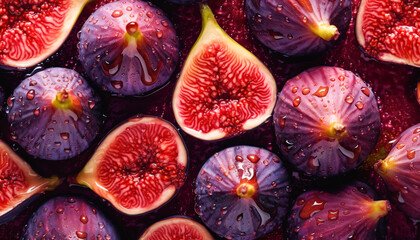
We’ve reached one of the most ancient and storied fruits in human history: the fig. Mentioned in some of the world’s oldest texts and prized by the Romans and Greeks, the fig is unique because it is technically an inverted flower.
Here is the breakdown of this sweet, chewy marvel:
🏺 Varieties You Should Know
While there are hundreds of types, these are the ones you’ll most likely find at the market:
-
Black Mission: Deep purple skin and strawberry-colored flesh. These are very sweet and sticky, making them the standard for snacks and desserts.
-
Brown Turkey: Rust-colored skin and milder flavor. These are excellent in salads because they aren’t quite as “sugar-heavy” as the Black Mission.
-
Adriatic/Candy Stripe: Green or striped skin with bright pink insides. These have a very high sugar content and are often used to make fig jams.
-
Calimyrna: Large with greenish-yellow skin and a distinct nutty flavor. These are the ones most commonly sold dried.
🥗 Health Benefits
Figs are nature’s candy, but they come with a serious nutritional punch:
-
Digestive Hero: They are incredibly high in soluble fiber (especially when dried), making them a world-famous natural remedy for digestion.
-
Calcium Boost: Figs are one of the best plant-based sources of calcium, which is rare for a fruit.
-
Complex Sugars: While high in sugar, they have a lower glycemic index than many processed sweets because the fiber slows down sugar absorption.
🐝 The “Wasp” Mystery
There is a famous biological “rumor” that figs contain dead wasps.
-
The Truth: Many wild fig varieties rely on a tiny fig wasp for pollination. The wasp enters the fig, lays eggs, and dies inside.
-
The Science: The fig produces an enzyme called ficin that completely breaks down and digests the wasp’s body into protein.
-
Modern Reality: Most figs sold in grocery stores today (like the Black Mission) are parthenocarpic, meaning they are self-pollinating and do not require wasps at all. So, your Fig Newtons are bug-free!
🍽️ Perfect Pairings
Figs are the MVP of the “Sweet & Savory” world. Try these combinations:
-
The Classic: Fresh fig + Goat cheese + Honey.
-
The Salty: Wrapped in Prosciutto and lightly grilled.
-
The Crunch: Sliced on toast with almond butter and a sprinkle of sea salt.
💡 Selection & Storage
-
The “Give” Test: A ripe fig should be soft to the touch—almost like a balloon that’s lost a little air. If it’s hard, it was picked too early and won’t ripen well at home.
-
The Shelf Life: Figs are extremely fragile. They only last about 2–3 days in the fridge, so buy them only when you’re ready to eat them!
Would you like me to find a recipe for a Fig and Balsamic glaze for your next dinner, or are you interested in how to grow a “Fiddle Leaf Fig” vs. an edible Fruiting Fig?
Reviews
There are no reviews yet.