
In India, “Full Meals” (often called a Thali or Bhojanam) is more than just a plate of food—it’s a scientifically balanced symphony of flavors: sweet, sour, salty, bitter, pungent, and astringent.
Depending on where you are, a “Full Meal” changes its personality. Here are the two most iconic versions you can recreate or find.
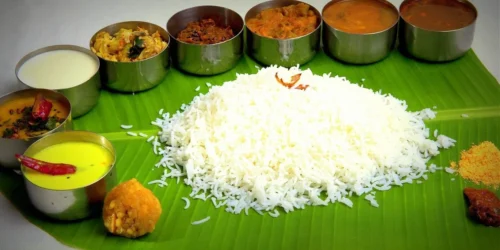
1. The South Indian “Meals” (The Banana Leaf Experience)
This is typically vegetarian, light on the stomach, and centered around rice.
| Course | Component | Description |
| The Base | Steamed Rice | The foundation for everything else. |
| The Starters | Paruppu & Ghee | Plain boiled lentils with a dollop of ghee to start the meal. |
| The Gravies | Sambar & Rasam | Lentil-vegetable stew followed by a peppery, tangy tamarind soup. |
| The Sides | Poriyal & Kootu | A dry vegetable stir-fry with coconut and a creamy lentil-veg mash. |
| The Crunch | Appalam & Pickle | Crispy papads and a spicy mango or lemon pickle. |
| The Digestif | Curd (Yogurt) | Essential to cool the palate at the end. |
| The Sweet | Payasam | A milk or jaggery-based pudding. |
2. The North Indian “Thali”
This is heartier, often featuring wheat-based breads and richer, creamier gravies.
The Menu
-
Breads: Hot Rotis or Butter Naan.
-
Dal: Usually Dal Tadka (yellow lentils) or Dal Makhani (creamy black lentils).
-
Sabzi (Vegetables): One dry dish like Aloo Gobi and one gravy dish like Paneer Butter Masala.
-
Rice: Jeera Rice or a simple Veg Pulao.
-
Accompaniments: Boondi Raita (yogurt with tiny chickpea flour balls), sliced onions with lemon, and green chutney.
-
Dessert: Gulab Jamun or Rice Kheer.






Reviews
There are no reviews yet.