
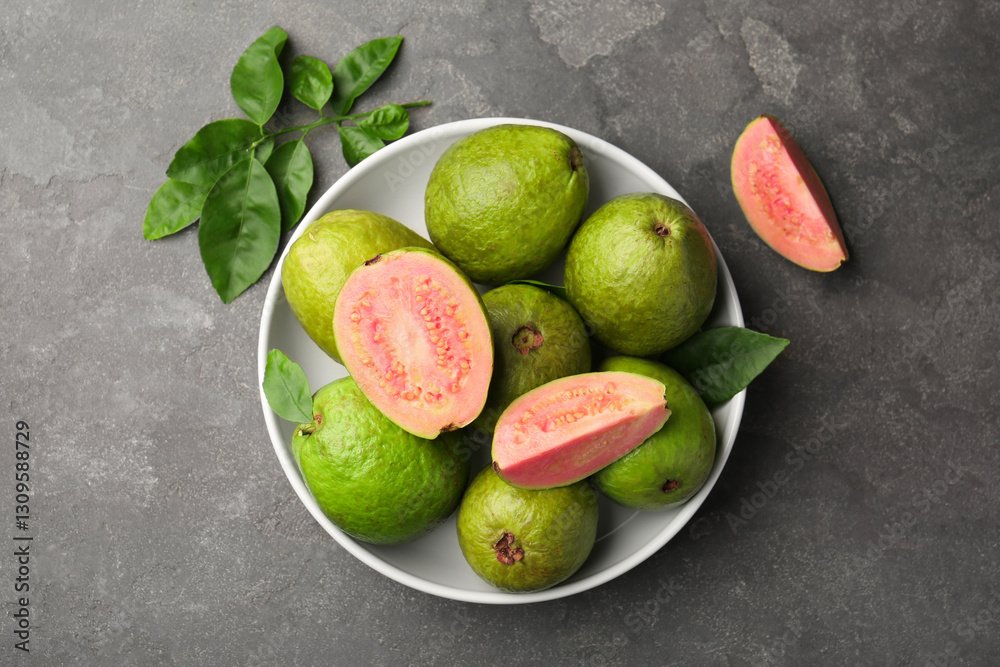
We’ve arrived at the “Tropical Apple”—the guava. While it might look humble on the outside, it is arguably the most nutritious fruit we’ve discussed so far.
As of February 2026, guava is trending in the health world as the ultimate “immunity hack” due to its staggering Vitamin C levels.
🎨 The Varieties: White vs. Pink
The two most common types offer very different experiences:
-
White Guava: Known for a firm, crunchy texture and a mildly sweet, slightly tart flavor. It has the highest pectin content, making it the “gold standard” for jams and jellies. Varieties like Allahabad Safeda are prized for being impeccably sweet.
-
Pink/Red Guava: These are the aromatic “superstars.” They have a softer, creamier texture and a deep, tropical sweetness (think a mix of strawberry and pear). The pink color comes from lycopene, the same heart-healthy antioxidant found in tomatoes.
🥗 The Vitamin C King
If you think oranges are the go-to for Vitamin C, prepare to be humbled by the guava:
-
The Comparison: A single guava contains about 4x to 6x more Vitamin C than an orange.
-
The Fiber Factor: It is a digestive powerhouse, with one fruit providing about 12–20% of your daily fiber needs.
-
Blood Sugar Friendly: Guava has a very low Glycemic Index (GI), and some studies suggest that even guava leaf tea can help reduce blood sugar spikes after a meal.
🍽️ How to Eat It Like a Local
In many parts of the world (especially India and Thailand), guava isn’t eaten as a dessert—it’s a savory snack.
-
The Street Style: Slice a firm, slightly underripe green guava and sprinkle it with a mix of salt and chili powder. The heat and salt perfectly cut through the tartness.
-
The “Whole” Truth: You can eat the entire fruit—skin, flesh, and seeds. The seeds are very hard (like small pebbles), so most people either swallow them whole or spit them out. Pro tip: Avoid biting down hard on the seeds if you have sensitive teeth!
-
The Shell (Cascos de Guayaba): A popular Latin American dessert involves scooping out the seedy center and poaching the “shells” in a light syrup.
💡 Selection & Storage
-
The Scent: A ripe guava is one of the most fragrant fruits on Earth. If it doesn’t smell like a tropical paradise, it’s not ready.
-
The Touch: It should give slightly under your thumb, similar to a ripe avocado.
-
Storage: Once ripe, guavas go from “perfect” to “mushy” very quickly. Keep them in the fridge to stretch their life by another 2–3 days.
⚠️ A Note on the Seeds
While perfectly edible, guava seeds act as a natural laxative for some people. If you have a sensitive stomach, you might want to scoop the centers out and use them for a strained juice instead.
Would you like me to find a recipe for a “Guava and Cheese” pastry (a Caribbean classic), or perhaps a guide on how to make guava leaf tea for its health benefits?

Reviews
There are no reviews yet.