
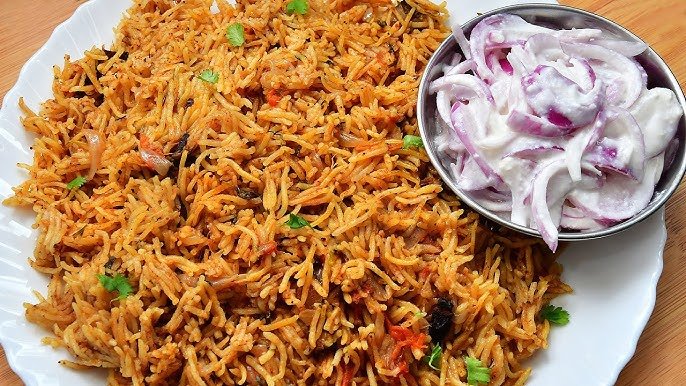


fter a crispy plate of Gobi Noodles, Kuska is the perfect follow-up—it’s the soul of a biryani without any of the “distractions” (meat or vegetables).
Commonly known as Plain Biryani or Empty Biryani, Kuska is a fragrant South Indian rice dish. The name comes from the Urdu word Khushk, meaning “dry,” but don’t let that fool you—it is incredibly rich, buttery, and packed with spice.
Why People Love It
Kuska is the “chef’s choice” for those who want to focus entirely on the quality of the rice and the balance of the spices.
-
The Rice: Unlike Northern biryanis that almost exclusively use Basmati, authentic Tamil Nadu-style Kuska often uses Seeraga Samba rice. These tiny, ovular grains absorb flavors much more intensely than Basmati.
-
The Flavor: It’s cooked in a base of ghee, onions, tomatoes, and a heavy hand of mint and coriander.
-
The “Secret” Ingredient: Many restaurants use meat stock (chicken or mutton) to cook the rice even if there are no pieces in it. This gives it that deep, savory “meaty” Umami flavor.
How it Differs from Pulao
A common mistake is calling Kuska a “Pulao.” Here is the distinction: | Feature | Kuska | Pulao | | :— | :— | :— | | Spice Level | High, robust, and punchy. | Mild, subtle, and aromatic. | | Preparation | Uses Biryani techniques (sometimes even Dum). | Simple one-pot sauté and boil method. | | Base | Often includes ginger-garlic paste and yogurt. | Usually relies on whole spices and broth. |
The Perfect Sidekicks
Since Kuska is “empty,” it’s designed to be a vehicle for bold side dishes:
-
Salna: A thin, spicy, street-style gravy (often the “empty” version of a chicken curry).
-
Onion Raita: To cut through the heat.
-
Boiled Eggs: The classic “protein upgrade” for a plain Kuska.
Wit’s Tip: If you’re ordering Kuska at a local “Mess” or military hotel, check if it’s a vegetarian day. If it isn’t, that “plain” rice likely has some very delicious (but non-veg) history in its cooking pot!







Reviews
There are no reviews yet.