
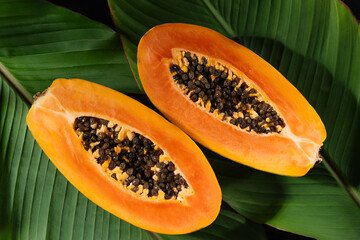
We’ve reached the “Fruit of the Angels” (as Christopher Columbus called it): the papaya. In February 2026, the papaya is having a major moment as a “functional food,” specifically for those looking to improve gut health naturally.
Here is the current “pulp” on the papaya market as of February 12, 2026:
🎨 2026 Variety Spotlight
If you’re shopping this month, you’ll likely see these main types:
-
Red Lady: The current commercial “superstar” in 2026. It is large (up to 2kg), oblong, and has vibrant salmon-red flesh. It is preferred by growers because it’s naturally resistant to the Ringspot virus.
-
Sunrise Solo: The “personal-sized” papaya. It’s small, pear-shaped, and has a very high sugar content. Great if you don’t want a giant fruit taking up fridge space.
-
Tainung (Formosa): A large variety similar to Red Lady but often has green-spotted yellow skin and a milder, melon-like aroma.
-
The “Green” Papaya: Not a different variety, but the unripe version of the fruit. In 2026, it remains a staple for savory dishes like Som Tum (Thai Papaya Salad) or Indian Papaya Sambharo.
📉 2026 Market & Price Update
The papaya market is currently quite dynamic:
-
Current Value: The global papaya market is estimated at $15.94 Billion in 2026, with the Asia-Pacific region (especially India) dominating about 60% of the world’s production.
-
Price Surge: You might notice higher prices this month. Recent flooding and persistent rainfall in late 2025/early 2026 in major growing belts have limited the supply of “natural red” papayas, pushing prices up by nearly 200% in some wholesale markets.
-
Lunar New Year Demand: Prices have also been bolstered by high demand leading up to the Lunar New Year (which was earlier this week on February 17, 2026).
🥗 Health Benefits (2026 Perspective)
The papaya is essentially a natural medicine cabinet:
-
The Papain Factor: Contains papain, a powerful enzyme that breaks down tough protein fibers. In 2026, it is trending as a “post-meal dessert” to reduce bloating and support digestion.
-
Immunity Boost: One small papaya provides 150-200% of your daily Vitamin C, making it a more potent immune booster than many citrus fruits.
-
Lycopene & Vision: Rich in lycopene and beta-carotene, it is being highlighted this year for its ability to protect eye health and reduce inflammation in the retina.
-
The Seeds: Don’t toss them! In 2026, dried papaya seeds are being used as a popular “black pepper” substitute that helps eliminate intestinal parasites and support kidney health.
💡 Pro Tips for Selection & Storage
-
The “Give” Test: A ripe papaya should feel like a ripe avocado—firm but yielding to gentle thumb pressure.
-
The Scent: Smell the stem end. If it has a sweet, tropical aroma, it’s ready. No smell means it’s still “hard-mode” and needs more time.
-
Ripening Hack: To ripen one quickly, put it in a paper bag with a banana. The ethylene gas from the banana will soften the papaya in 24 hours.
-
Storage: Once ripe, keep it in the fridge (wrapped in newspaper or a bag) to last up to one week.
⚠️ A Note on Pregnancy
In many cultures (and supported by modern science), unripe (green) papaya should be avoided during pregnancy as it contains high levels of latex that can trigger uterine contractions. The fully ripe, yellow/orange fruit is generally considered safe and healthy!
Would you like me to find a recipe for a “Red Lady” smoothie bowl, or perhaps some tips on how to use papaya seeds as a spice?
Reviews
There are no reviews yet.