
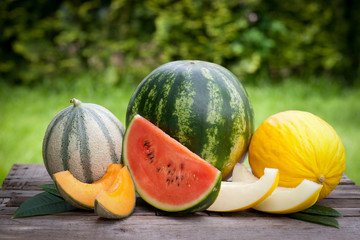
We’ve reached the ultimate thirst-quencher: the watermelon. In February 2026, the watermelon market is celebrating a historic milestone, with global production hitting a record high of nearly 105 million tons.
Here is the “refreshing” update on watermelons as of February 12, 2026:
📈 2026 Global Market & Trend Snapshot
-
Record-Breaking Harvest: Despite a reduction in total farming land, 2026 has seen record yields due to high-tech “F1 Hybrid” seeds. China remains the undisputed leader (60% of global production), followed closely by India, Turkey, and Brazil.
-
The “Panama Export” Surge: Just this week (February 8, 2026), Panama launched a major export campaign, shipping over 700 containers of premium watermelons and melons to Europe (specifically the Netherlands and the UK).
-
Seedless is King: In 2026, seedless (triploid) varieties now account for over 80% of production in high-value markets like the US and Europe, commanding a 20% price premium over seeded varieties.
🎨 2026 Variety Spotlight: Beyond Red
The “standard” watermelon is being joined by colorful and climate-resilient newcomers:
-
Baby Doll F1: A trending yellow-fleshed variety this month. It’s a “mini” melon (3–5 kg) that is exceptionally sweet and crisp.
-
Altata RZ: A new 2026 commercial standout known for its intense “neon” red flesh and high seed setting, designed for better shipping stability.
-
Yellow & Orange Varieties: Varieties like Cream of Saskatchewan (pale yellow) and Orange Crisp are appearing more in high-end markets this February for their unique honey-like flavor profiles.
-
Dark Knight: A seedless variety with a deep, almost black rind and very firm, bright red flesh—highly sought after for “fresh-cut” fruit bowls in 2026.
🥗 Health & Science: 2026 Wellness Pulse
Watermelons are being rebranded as a “performance fruit” in early 2026:
-
Lycopene Leader: Watermelon contains more lycopene than raw tomatoes. This antioxidant is being highlighted this year for its ability to help protect skin from “digital blue light” and UV damage.
-
L-Citrulline: This amino acid, concentrated in the white part of the rind, is a top 2026 fitness trend for reducing muscle soreness and improving recovery time after workouts.
-
Hydration Plus: At 92% water, it provides the same hydration as a sports drink but with natural electrolytes like potassium and magnesium.
🛠️ 2026 “Pro-Pick” Guide
Since watermelons stop ripening the moment they are cut from the vine, follow these updated 2026 selection rules:
-
The “Yellow Belly”: Flip it over. You want a creamy, buttery yellow field spot. If it’s white or green, it’s underripe; if it’s deep orange, it might be overripe and “mealy.”
-
The “Dull” Finish: In 2026, experts remind us that a dull, matte rind is a sign of ripeness. A shiny watermelon is usually a sign that it’s still growing and hasn’t reached its peak sugar level.
-
The “Tenor” Thump: Tap it with your knuckles. You want a deep, hollow “thud” (like a tenor drum). A high-pitched “ping” means it’s too firm/unripe; a flat “clunk” means it’s past its prime.
-
Sugar Spots: Look for small, brown, rough “webbing” or “bee stings” on the skin. These are scars from where bees touched the flower frequently—the more webbing, the sweeter the fruit.
🧊 Storage Tip
Keep your whole watermelon at room temperature to preserve its antioxidants. Once you cut it, it must be refrigerated and is best eaten within 5 days.
Would you like me to find a recipe for a “Watermelon & Feta” summer salad, or are you interested in how to pickle the rinds (the 2026 zero-waste trend)?
Reviews
There are no reviews yet.